Ayaaz Habib
Current Employer/Organisation Name
Guy’s and St.Thomas’ NHS Foundation Trust
What have you been doing since leaving Exeter, and what are you doing now?
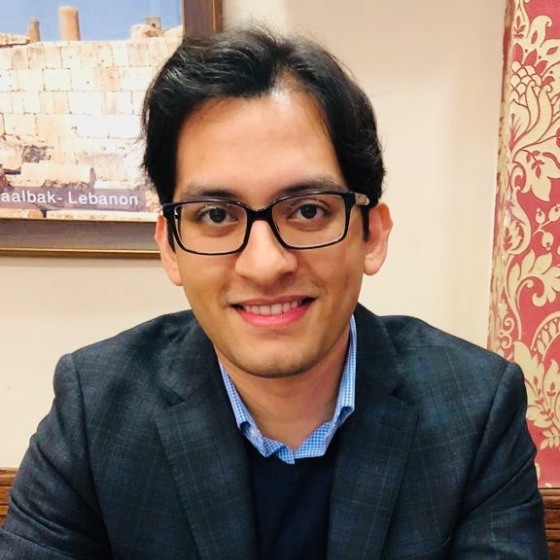
After graduating in Medicine from Exeter, I embarked on a decade-long journey through the NHS, training across eleven hospitals in England. My path in ENT and Head & Neck Surgery took me from foundation doctor to registrar, culminating in the award of my Certificate of Completion of Training (CCT) in 2024. I am currently completing a prestigious Head & Neck Cancer Fellowship at Guy’s Hospital, London — one of Europe’s leading centres for complex head and neck oncology.
My journey has been one of steady growth, perseverance, and purpose. Each stage — from long nights as a trainee to the privilege of leading major cancer operations, has shaped not only my skills but also my character. I remain passionate about surgical education and mentorship, and hope to inspire the next generation of doctors to pursue excellence with humility, courage, and compassion.
Why did you choose this career? And what do you enjoy most about your work?
I chose surgery because it united everything I valued — science, discipline, and the ability to make a lasting difference. From the very beginning of medical school, I was drawn to the immediacy of surgery: the fact that your skill and focus could change the course of someone’s life in a single operation.
Head and Neck Surgery, especially in cancer care, demands both precision and empathy. It’s not only about removing disease but about helping patients reclaim their voice, their confidence, and their identity. That’s what gives this field its depth.
What I enjoy most is the privilege of being part of a patient’s recovery — guiding them from fear to hope — and the quiet satisfaction that comes with mastering a complex craft. Every day, I’m reminded that surgery is not just about hands and instruments, but about humanity and purpose.
Please tell us if you were a member of any societies, groups or sports clubs?
Yes, I played cricket during my first and second years. It was a great way to unwind from the demands of medical school and to meet students from other disciplines.
What did you enjoy most about your programme and what was the biggest highlight?
What I enjoyed most about the Medicine programme was how well it balanced academic rigour with clinical exposure. The early patient contact and the supportive teaching environment helped shape my clinical reasoning and communication skills — both of which became the foundation of my career ahead.
The biggest highlight was the sense of discovery — realising, for the first time, the depth of responsibility that comes with being a doctor. Exeter gave me not only a degree, but a sense of purpose and direction that has guided every stage of my journey since.
What did you most enjoy about studying here?
What I enjoyed most about studying at Exeter was the atmosphere of calm focus. It was a place that encouraged both discipline and reflection — qualities that quietly mould a doctor long before they ever wear a stethoscope.
I loved the balance between academic challenge and the sense of community. The faculty were approachable and the friendships I formed there helped me stay grounded through the long, demanding years of training that followed and I still value them to this day.
Why did you choose to study at Exeter?
I chose Exeter because it offered the right balance between academic excellence and a genuine sense of community. Coming to the UK alone at 16, I wanted a medical school where I could feel supported while still being challenged to grow. Exeter’s emphasis on producing thoughtful, well-rounded doctors — not just scientists , really resonated with me.
It became the place where I learned not only how to study medicine, but how to live with discipline and compassion. Looking back, I realise it was the ideal environment to begin such a demanding and deeply human profession.
What skills and experiences have been most useful for your career?
Exeter taught me the foundations of clinical reasoning, communication, and professionalism — skills that remain central to my career every single day. The early exposure to patient contact and the emphasis on reflection were invaluable, especially in a specialty like head and neck surgery where empathy and clarity are as important as technical skill.
More broadly, the course nurtured consistency and discipline — the ability to keep learning, keep improving, and stay composed under pressure. Those qualities have guided me through over a decade of surgical training across the UK and now into a consultant-level role.
What advice would you give to a current student who wishes to pursue your career?
If you wish to pursue surgery, understand that this path demands not just skill, but your entire being. It will test your endurance, your patience, your faith, and at times, your sense of self. But if you give it everything, it will give you back more than you ever imagined — purpose, respect, and the quiet pride of mastery.
There will be days when you question yourself, and days when no one notices what you’ve built. That’s when you keep going. Success in medicine is forged in silence — not applause. Be the one who stays steady when others falter.
Cherish your friends. Protect your loyalties. In the long nights, it’s the people who believed in you and those you stood by who will remind you why you started.
And above all, have faith. What’s meant for you will never miss you, and what misses you was never meant for you. Walk your path with sincerity and courage — and the world will make room for your light.
What are your plans for the future?
My next goal is to establish myself as a leading Head and Neck Cancer surgeon in the Middle East, building on the surgical expertise and professional standards I’ve developed through the NHS and my fellowship at Guy’s Hospital. I aim to combine advanced clinical work with academic and educational initiatives that help refine and elevate surgical talent across India, the Gulf, the Levant, and wider regions.
In time, I hope to create a structured training platform that represents the best of UK medical education — blending its rigour, ethics, and innovation — and serve as a bridge between British surgical excellence and the next generation of international surgeons. My years in the UK have shaped not just my skill but my outlook, and I now hope to carry that legacy forward as one of its ambassadors abroad.