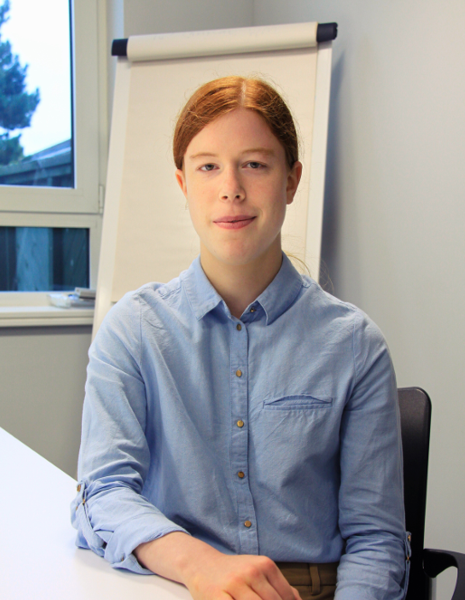
Kira Jefferies
Current Employer/Organisation Name
Colas Ltd.
What have you been doing since leaving Exeter, and what are you doing now?
Since leaving Exeter, I have been working for the highways infrastructure company Colas Ltd. as a Carbon Analyst on the Live Labs 2 programme, a 3-year DfT-funded programme aiming to decarbonise local highways maintenance operations. I work with various local highways authorities across two projects – the Liverpool Live Lab with Liverpool City Council, and the Wessex Live Lab with Cornwall Council, Hampshire County Council, and Somerset Council – to quantify the carbon emissions from their highways maintenance activities, identify ‘carbon hotspots’ to prioritise for decarbonisation, and assess the carbon-saving potential of various innovative solutions.
I have also collaborated with the FHRG (Future Highways Research Group) on the development of their carbon calculator Carbon Profiler Toolkit and the implementation of the Carbon Leadership Programme – a sustainability benchmarking exercise for local highways authorities – as well as supporting with internal carbon reporting and decarbonisation activities within Colas.
Why did you choose this career? And what do you enjoy most about your work?
I was attracted to this role because I had previously been involved with carbon accounting as part of a Nuffield Research Project with the Environment Agency in 2019, and had also undertaken several projects at Exeter involving carbon footprinting, due to my conviction in the importance of mitigating against the climate emergency, so I believed that I had the relevant skills and experience for the job. Whilst I had not previously considered working in the Highways infrastructure sector, I was aware that it is one of the most carbon-intensive industries in the UK, so I was determined to use my environmental expertise to address this challenge.
The most enjoyable thing about my job is interacting with a fun, diverse, and supportive team of colleagues, as well as building up positive relationships with clients and other external stakeholders. I’ve enjoyed a range of social events with my colleagues, from team days out to competing in Colas’ international talent competition! I also enjoy travelling around the UK to attend and sometimes speak at major industry events, as it is an exciting part of my role, and I find it rewarding to share and celebrate our achievements with others.
Please tell us if you were a member of any societies, groups or sports clubs?
I was the committee Librarian for the FX Orchestra, where I played the violin, and I was also a member of the Green Living Society.
What did you enjoy most about your programme and what was the biggest highlight?
As I love plants, trees, and being out in nature, my favourite experience was the fieldwork. I enjoyed our field trip to the Isles of Scilly and going to Bodmin Moor to collect data for my dissertation on the relationships between grazing, vegetation, and carbon fluxes, but the biggest highlight was our 3rd-year field trip to the Scottish Highlands, being surrounded by moss and birches and Scots pines in one of the most beautiful landscapes in Britain!
What did you most enjoy about studying here?
Apart from the fieldwork, I enjoyed learning new skills from engaging lecturers, particularly using QGIS in our remote sensing and GISS modules with Karen Anderson and Liam Reinhardt. As a visual learner with an interest in ecology, I enjoyed using QGIS to map tree cover and design a butterfly reserve in these modules.
Why did you choose to study at Exeter?
I wanted to study at a highly regarded university with strong environmental credentials, and liked the University of Exeter for its tranquil campus environment and Russell Group status. When I applied, I was also interested in a course with environmental law modules, although I ultimately became more interested in the physical geography and bioscience elements of the course.
What skills and experiences have been most useful for your career?
Having a solid foundation in data analytics and statistics has been helpful for my role as a Carbon Analyst, as well as having an understanding of the sustainability implications of alternatives to fossil fuels, such as biofuels and hydrogen.
What advice would you give to a current student who wishes to pursue your career?
Find opportunities to integrate elements of carbon analysis into your work, however minor – for example, my hiring manager was impressed by the fact that I used my carbon analysis skills to compare e-books to paper textbooks in my role as a student ambassador for the e-book company Kortext. Colas is also keen on social value and volunteering, so the fact that I spent my weekends as a woodland management volunteer alongside my studies also helped to boost my CV.
What are your plans for the future?
I want to move into a role focused on ecological carbon sequestration, so I am applying for a Masters degree in Environmental Forestry at the University of Bangor, after which I hope to gain a career with a local council, woodland management organisation, or carbon consultancy looking at how best to manage trees and wooded landscapes to maximise their carbon sequestration potential.