Sam Austin
Current Employer/Organisation Name
Saipem Ltd
What have you been doing since leaving Exeter, and what are you doing now?
Summer 2022 – Completed BEng Engineering and moved away from Exeter
Summer-December 2022 – Moved to Aberdeen for an Engineering Internship with Halliburton (Baroid – Mud flow operations for offshore drilling)
May 2023-Present – Moved to London, working with Saipem Ltd, first as a Graduate Methods Engineer, then as an Offshore Methods Engineer, performing Project Engineering for a range of offshore Transport & Installation projects (Wind Farm construction, O&G Decommissioning, etc.)
Why did you choose this career? And what do you enjoy most about your work?
I had a strong interest in the engineering side of offshore energy since choosing engineering after discussing with others I knew in the space.
After completing my degree during COVID, I felt I had missed out on a lot of the hands-on parts of university labs and clubs due to COVID restrictions, so looked for an introduction to offshore work through Halliburton’s internships. I sought to get some hands on experience and my offshore tickets at the same time (minimum training qualifications for offshore travel and work – BOSIET, MIST etc).
After this internship, I moved back down to London and joined Saipem, where I could combine the knowledge from my degree at Exeter with my interest in offshore engineering perfectly, and use the previous offshore experience with Halliburton to stand out as a candidate.
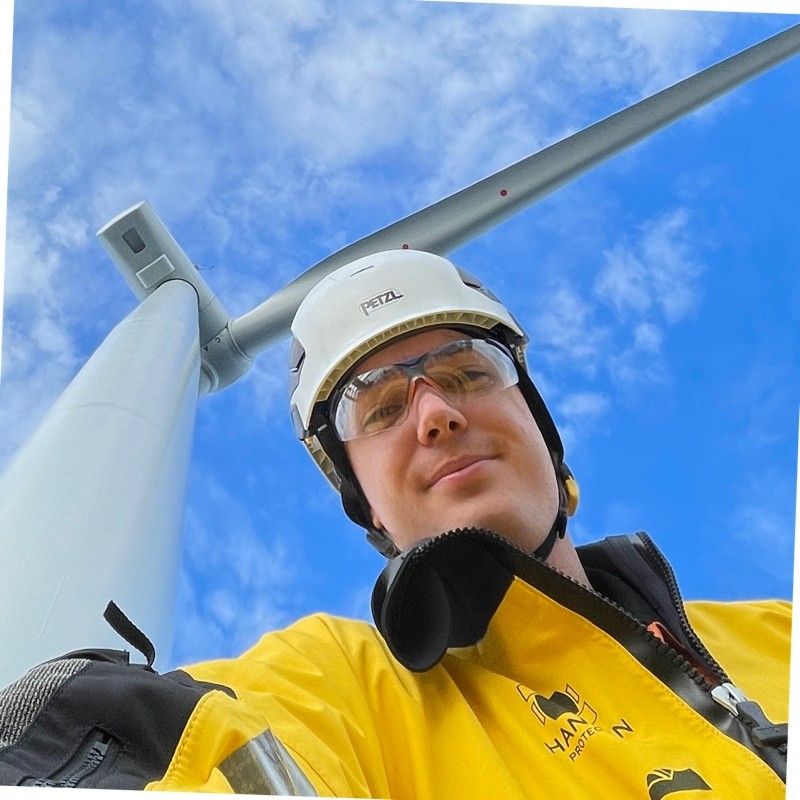
Now with Offshore construction, I most enjoy being able to follow a project through its lifespan; performing the early phase design and engineering calculations for how a structure will be built/prepared for installation, through to then visiting the sites where they (Substations/Jackets/support structures/wind turbines/Piles) are built around the world to aid in preparing them for installation, then finally to travel and go offshore on our huge construction vessels to perform the installation of these items. It creates a nice sense of progress and purpose to see from early stage theoretical designs to then actually see the in-place installation yourself as closure to a 1-4 year project/story of the installation.
Also, as mentioned above, the travel involved I greatly enjoy. Generally, I spend 10 months a year in the office, then around 1 month visiting construction yards and 1 month offshore on our vessels when averaged out, which to me is a good balance of not being away from home too much (vs offshore rotation working) whilst also getting to travel for work.
Please tell us if you were a member of any societies, groups or sports clubs?
I was part of Esports Society.
Why did you choose to study at Exeter?
Exeter has a strong track record in Engineering, is a Russell group university and stood out at the Open Day. It’s the perfect size of city for me, being a campus university but in a city busy enough that there is enough going on, whilst also having Dartmoor within easy driving distance to get out of the city when you want to.
What advice would you give to a current student who wishes to pursue your career?
Research the industry players and take any opportunity within the industry, even if it isn’t immediately what you are looking for. It is far easier to move between companies and roles than it is to get in the front door to start with, and most experience will be relevant and worthwhile.
What are your plans for the future?
Continue developing in my knowledge and understanding of offshore engineering, further work branching out for offshore wind into decommissioning works, and some Pipelay projects.
Lead Project engineering scopes offshore and possibly move more to a Contractor role rather than in-house staff.