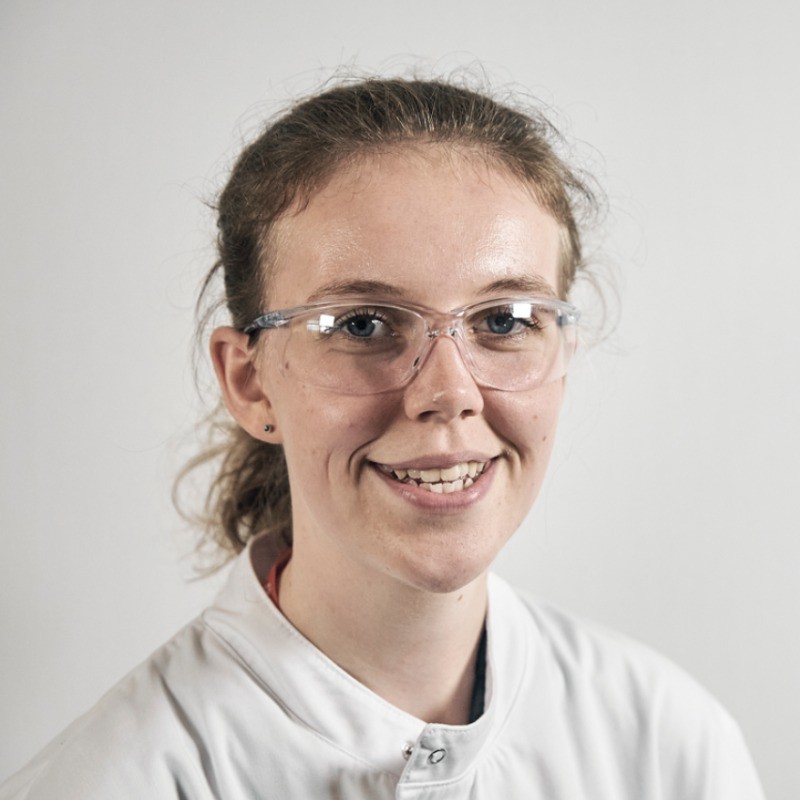
Shoana Haddow
Current Employer/Organisation Name
York Bioanalytical Solutions
What have you been doing since leaving Exeter, and what are you doing now?
I joined York Bioanalytical Solutions at their Sandwich, Kent site shortly after graduating from Exeter. In my first year, I spent time with different teams within DMPK (drug metabolism and pharmacokinetics), learning about their specialties and being trained in key techniques in the lab. I now focus on biotransformation studies – understanding how drugs are metabolised and cleared by the body. My role combines practical work at the laboratory bench with in-depth analysis of the data generated and spans compounds in early discovery through to clinical trials.
Why did you choose this career? And what do you enjoy most about your work?
When I graduated, I was looking to gain experience in the lab and do science that helped people. I had also spent my year in industry at Porton Biopharma Ltd, so knew I wanted to work in drug discovery and development. I now enjoy the variety and challenge of my role, with constant problem solving to keep me interested. Knowing that my work has the potential for real-world benefit remains important to me.
Please tell us if you were a member of any societies, groups or sports clubs?
I was a member of BodySoc and Exeter University Concert Band and played intramural netball.
What did you enjoy most about your programme and what was the biggest highlight?
The amount of contact hours and smaller size of the biochemistry cohort allowed me to develop good relationships with my coursemates and academic staff, to feel part of a community within Biosciences. My biggest highlight was the research project organised after exams in final year, providing an opportunity to get back into the lab after a year of remote learning.
What did you most enjoy about studying here?
I loved the lifestyle in Exeter, combining challenging academic study with taking part in society events, or being able to escape for a quiet walk in nature on the edge of the city.
Why did you choose to study at Exeter?
Alongside the breadth of the course, the feel of the Streatham Campus with its green spaces, lakes and streams yet proximity to the city was the deciding factor in choosing Exeter.
What skills and experiences have been most useful for your career?
My year in industry was especially helpful when applying for roles after university, as I had proven experience that was particularly important given the impact of pandemic restrictions at the time. My degree helped me develop the critical analysis and research skills that I use on a daily basis, and the scientific knowledge that underpins my work.
What advice would you give to a current student who wishes to pursue your career?
Seek as much laboratory and research experience as possible, the skills developed are more important than the specific area of research at the start of your career. Be curious and don’t be afraid to ask questions – it shows you want to learn.
What are your plans for the future?
At the moment, I plan to stay in drug metabolism research as long as it continues to challenge and excite me. I want to keep working at the laboratory bench and hope to one day see a drug I have worked on reach the market.