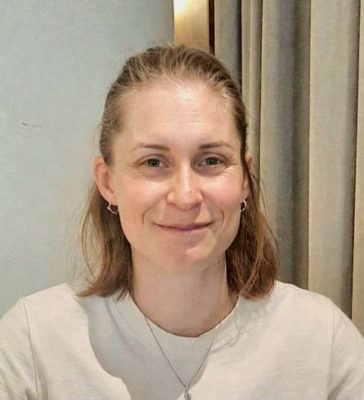
Connor Burns
Current Employer/Organisation Name
Richmond Wellbeing Service
What have you been doing since leaving Exeter, and what are you doing now?
Since completing my MSc Psychology at Exeter, I’ve worked across several mental health settings, including residential support for young people and as a Mental Health Treatment Requirement Practitioner within the probation service.
In September 2024, I started training as a Psychological Wellbeing Practitioner (PWP) within NHS Talking Therapies, completing my postgraduate training at UCL. I qualified in September 2025 and currently work as a qualified PWP within Richmond Talking Therapies. My role involves delivering evidence-based psychological interventions for people experiencing common mental health disorders, including guided self-help, CBT-based interventions and group work. I’ve also recently started supporting and supervising trainee PWPs in clinical practice.
Why did you choose this career? And what do you enjoy most about your work?
I’ve always been interested in understanding human behaviour and what influences the way people think, feel and respond to different situations. After studying psychology at Exeter, working directly with people in mental health settings confirmed that this was the career I wanted to pursue.
I particularly enjoy helping people better understand their difficulties, develop practical coping strategies and build confidence in managing their own mental health. Seeing people make progress, sometimes through relatively small changes, is really rewarding. I also enjoy the continuous learning involved in the role and the opportunity to develop my clinical skills while supporting others.
Please tell us if you were a member of any societies, groups or sports clubs?
I initially completed my undergrad at Exeter prior to completing my masters, I was involved in various sports clubs given my undergrad was in sports and exercise science!
What did you enjoy most about your programme and what was the biggest highlight?
I enjoyed the breadth of the course and the opportunity to explore different areas of psychology, particularly understanding how psychological theory can be applied to real-life situations. The biggest highlight was developing a strong foundation in psychology and gaining the knowledge that ultimately helped me pursue a career in mental health.
What did you most enjoy about studying here?
Exeter is a great place to study, the campus is lovely and there’s always something going on. Being in Devon was a bonus too, although the course did mean the odd late night in the library! Lots of good memories, both inside and outside the lecture theatre.
Why did you choose to study at Exeter?
Being from Devon, Exeter was always a university I aspired to study at. It had a great reputation academically, and being a Russell Group university was also an important factor in my decision. I was attracted by the opportunity to study at a well-respected university while remaining close to home.
What skills and experiences have been most useful for your career?
My degree gave me a strong foundation in psychological theory and research, which I now use in my day-to-day work as a PWP. Understanding human behaviour, critical thinking and being able to interpret research have all been particularly useful. Alongside this, my experiences working in different mental health settings have helped me develop communication, empathy and the ability to build relationships with people from different backgrounds. I think the combination of academic knowledge and practical experience has been invaluable in getting me to where I am today.
What advice would you give to a current student who wishes to pursue your career?
I’d recommend getting as much practical experience as possible, particularly in roles where you’re working directly with people. Don’t worry too much about having your entire career mapped out from the start. My own route into psychological practice involved a few different roles, and each one taught me something valuable. Be curious, make the most of opportunities, and remember the how impactful your work can be on the lives of others.
What are your plans for the future?
I’d like to continue developing my clinical skills and experience within psychological practice, particularly through further training and development opportunities. Longer term, I’d love to pursue a Doctorate in Clinical Psychology (DClinPsy) and work towards becoming a Clinical Psychologist. For now, I’m focused on learning as much as I can in my current role and making the most of the opportunities that come along.