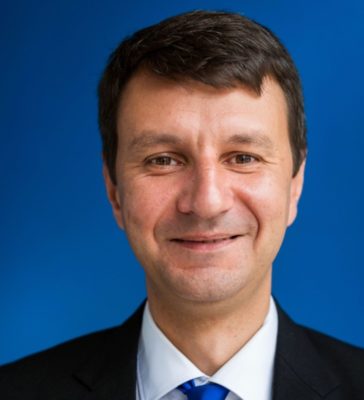
Jialin Chen
During her three years at Lamborghini, MA Human Resource Management (2022) graduate, Jialin Chen, spearheaded key brand initiatives, such as coordinating visits for international executives to China. She evolved from a newcomer into a seasoned professional capable of independently managing complex projects.
Today, armed with the invaluable experience and insights gained at Lamborghini, she has joined Lenovo as an Executive Secretary to a Vice President, continuing her exploration and professional growth on a new stage.
How did you first become involved with the automotive industry?
I’ve loved cars since I was a child. During my university years, there was a racetrack near my campus. I frequently volunteered there and even took on part-time roles related to the track. Through these experiences, I gained a significant amount of practical knowledge in the automotive industry. I also worked with various agencies, including some that collaborated with Lamborghini.
At the time, I didn’t have a clear-cut career plan; I was simply pursuing things that genuinely interested me. Looking back, I realise that these interests had, quite naturally, laid the groundwork for my future career path. This accumulated experience later became a key advantage when I applied for an internship at Lamborghini.
About four or five months into my internship, an Executive Assistant position opened up. Since I had already been with the company for a while, I was well-acquainted with the team and the workflow, and my performance had earned the recognition of my colleagues. When the opportunity arose, I was fortunate enough to secure a full-time role. Looking back, I’m quite grateful to my younger self for making that firm decision.
During your three years at Lamborghini, was there any project that left a deep impression on you – one that best reflects your personal growth?
One project that stands out is the visit of the Board of Directors from the Italian headquarters to China, a significant initiative that takes place every year. We had to host about 15 board members, with an itinerary packed with various activities, such as test-drive experiences, product launches, board meetings, and visits to technology companies.
The first time I was responsible for this project, I was incredibly flustered. As a newcomer to the professional world, I was overwhelmed by the sheer number of tasks running in parallel and had no idea where to begin. Back then, I relied heavily on my mentor – the Marketing Director at the time. She taught me how to break down a project, coordinate across different teams, and drive the preparation process forward. By the second year, I had become much more familiar with the overall workflow.
But it was in the third year that I truly felt my growth. When I took charge of a similar project again, I realised that I already had a clear, comprehensive roadmap in my mind. I knew exactly how to vet suppliers, which companies to reach out to in advance, what information to gather, and how to orchestrate the various moving parts. For instance, when arranging test drives for the board members, I was able to determine – based on our project objectives – which Chinese automotive products to showcase, which racetracks to book, and how to structure the on-site experience and presentations.
In that moment, I realised I was no longer the bewildered newcomer I had been in my first year.
What skills did you develop during your time as an Executive Assistant at Lamborghini that have proven beneficial in the long run?
First and foremost, I gained a well-rounded set of professional skills and the ability to adapt to a corporate environment. My role required frequent collaboration with colleagues across various departments to coordinate cross-functional projects, which helped me build extensive experience in communication, teamwork, and project management. These are skills that remain valuable, regardless of any future changes in industry or job function. A second, highly critical skill is multitasking and rapid learning. Many people assume that the role of an assistant or secretary revolves solely around managing a boss’s schedule. However, the scope of an executive’s responsibilities is often extremely broad. As an Executive Assistant, you don’t necessarily need to be more expert than the specialists in each business unit, but you must possess a solid understanding of the various business segments and be able to respond quickly to diverse demands. During my three years at Lamborghini, I learned to rapidly acquire knowledge across fields such as Sales, After-sales, and Operations, synthesizing this information to better support executives in their work.
If you had to summarise your professional journey since graduation using three keywords, which would you choose?
The first is “trial and error.”
As a fresh graduate entering the workforce, you are bound to go through a process of trial and error. I was fortunate to work with exceptional professional managers at Lamborghini – leaders who were genuinely committed to developing young talent. They allowed for mistakes, but more importantly, they taught me the necessity of understanding *why* a mistake occurred and how to prevent it from happening again. I believe this capacity for trial, error, and self-correction is something that will benefit me throughout my entire career.
The second is “accumulation.”
Early in one’s career, it’s easy to feel as though you are handling the same tasks day in and day out. Yet, I’ve come to realise that even within similar work, you can accumulate distinct and valuable experiences.
Eventually, you may encounter a challenge you’ve faced before, only to find that you already know how to resolve it – and perhaps even handle it better than you did the first time. In that moment, you realize that nothing you’ve accumulated over the years has gone to waste.
The third is “positioning.”
As students, we often aspire to become highly successful individuals, reaching the very pinnacle of our professional fields.
However, after a few years in the workforce, I’ve come to understand that “success” means something different to everyone. I have gained a much clearer sense of my own personality and what I truly strive for. I find great fulfilment in supporting others toward success, and I aspire to be an excellent management support professional. At the same time, I also value having the time and freedom to enjoy life outside of work.
Therefore, I believe a crucial aspect of career development is truly understanding what you want. You cannot have everything – trying to pursue every possible option at once isn’t realistic. Finding the right niche for yourself is a form of growth.
Why did you choose the University of Exeter, and why did you decide to study Human Resource Management?
I chose the University of Exeter primarily because I was drawn to its calm and grounded academic atmosphere. Since I was pursuing my master’s degree during the pandemic, a safe and comfortable environment was particularly important to me.
As for my field of study, I had majored in accounting as an undergraduate; I chose a master’s in human resource management to broaden my understanding of corporate management. The program focused on personnel management within an international context, leadership development, and practical management skills, all of which aligned perfectly with my interests and career aspirations.
Looking back, the knowledge I gained in both Accounting and Human Resource Management has allowed me to view business operations from both financial and personnel perspectives. This has been incredibly helpful in my role as an Executive Assistant, where I often coordinate across various business departments. I am very satisfied with the academic path I chose.
How have you stayed connected with the University of Exeter since graduation?
Since graduating, I’ve kept up with professional development resources through the university’s alumni team and stayed active in our alumni groups. Whenever I’ve come across internship or job openings at the companies where I’ve worked, I’ve shared them with the group, hoping to provide some useful leads for fellow alumni who are currently job hunting. I also look forward to participating more in events organized by the ECAA (University of Exeter Chinese Alumni Association) and connecting with other alumni to share our respective experiences.
What advice would you give to students who are currently preparing for their first job?
First, I encourage students to explore industries that genuinely interest them while still in school. Engage in internships, volunteer work, and other practical experiences, and reach out to professionals in the field to gain a realistic understanding of the work environment. Once you have a clearer sense of your career direction, you can intentionally build relevant experience, ensuring that your various roles and activities connect to form a distinct set of strengths. For instance, the activities I participated in – driven by my personal passion for cars – ultimately became valuable assets that helped me secure a position at Lamborghini.
Second, take the time to fully understand your own interests, personality, and strengths, and clarify what you truly want. Some people prioritise stability, others value growth opportunities or income, while some seek a balance between their professional and personal lives. There is no absolute right or wrong when it comes to these choices; the key is to find a career path that aligns with your personal aspirations. Therefore, when job hunting, rather than blindly chasing “hot” industries, you should consider not only the industry’s long-term prospects but also the company’s approach to talent development and how well a specific role matches your own skills and capabilities.