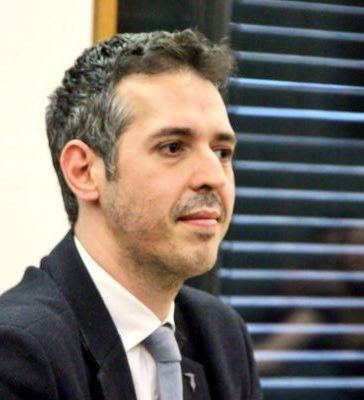
Maria Blanco-Palencia
Current Employer/Organisation Name
European University Association
Can you give us an overview of what you have done since you completed your research degree?
Since completing my PhD in Politics at the University of Exeter, my professional journey has evolved from academia into higher education leadership, policy, and institutional transformation at both national and European levels.
Following my doctoral studies, I worked in academia, teaching undergraduate and postgraduate courses in Politics, International Relations, and Middle Eastern Studies at universities in Spain, the United Kingdom, and Jordan. My academic work focused particularly on contentious politics, conflict management, and political transformation in the Middle East and North Africa.
I later transitioned into higher education policy and university governance, joining the Conference of Rectors of Spanish Universities, where I served as Head of International Engagement. In this role, I led the association’s internationalisation strategy, coordinated policy work linked to the European Higher Education Area and the European Research Area, and worked closely with Spanish universities on institutional development and European policy engagement.
More recently, I joined the European University Association, where I currently work as Adviser in the Governance, Funding and Public Policy Development Unit. My work focuses on supporting leadership development for senior university leaders across Europe, particularly through the design and implementation of the EUA Leadership Development Programme, which I have led since its launch in 2025.
Alongside this, I continue contributing to higher education reform in Spain through advisory work with ANECA, supporting institutional transformation and reforms in research assessment aligned with the work of Coalition for Advancing Research Assessment.
Looking back, my career has increasingly moved toward working at the intersection of leadership, institutional transformation, and public policy — helping universities navigate complex change while contributing to broader reforms in higher education systems.
How did you become interested in the area you work in?
My interest in the area I work in today developed gradually through a combination of academic research, international experience, and a growing fascination with how institutions evolve and respond to complex change.
During my PhD at the University of Exeter, I focused on organisational behaviour, collective strategy, and the relationship between institutions, power structures, and social change. Although my research examined social movements and political transformation in the Middle East and North Africa, I became increasingly interested in broader questions around leadership, organisational dynamics, strategy, and how institutions adapt in periods of uncertainty.
Over time, this led me to move beyond academia and towards higher education policy and university governance. Through my work with the Conference of Rectors of Spanish Universities, and later with the European University Association, I found myself increasingly drawn to supporting universities as organisations facing major transformation challenges, whether related to governance, leadership development, funding, innovation, or institutional change.
What continues to motivate me is the opportunity to work on questions that have both strategic and societal impact: helping higher education institutions adapt, evolve, and remain capable of responding to increasingly complex global challenges while preserving their core public mission.
How did you find opportunities in the area you work in and how did the recruitment process work?
My career path has not followed a completely linear trajectory, but rather developed through gradually identifying where my academic background, professional interests, and opportunities intersected.
After completing my PhD at the University of Exeter, I initially pursued opportunities in academia, teaching and conducting research in areas connected to politics, international relations, and Middle Eastern studies. Over time, however, I became increasingly interested in the institutional side of higher education: how universities are governed, how policy shapes their development, and how institutions respond to broader societal change.
This led me to seek opportunities beyond traditional academic career paths, particularly roles connected to higher education policy and university strategy. I joined the Conference of Rectors of Spanish Universities, where I progressively moved into leadership and coordination roles focused on internationalisation and strategic institutional development. Through this experience, I built strong professional networks within the higher education sector, which later opened opportunities to work at the European level.
My move to the European University Association followed a fairly standard recruitment process involving an open call, application, and interview process. More broadly, I would say that building expertise in a specialised area, staying engaged with professional networks, and remaining open to opportunities outside traditional career expectations were all essential in shaping my career journey.
One of the most important lessons I learned is that careers often evolve in unexpected ways, and sometimes the most interesting opportunities emerge when you allow yourself to apply your skills in new contexts beyond the path you originally imagined.
What does your current role involve?
I currently work as an Adviser in the Governance, Funding and Public Policy Development Unit at the European University Association, where I support initiatives focused on leadership development, university governance, and institutional transformation across the European higher education sector.
A significant part of my work involves designing and coordinating programmes that support senior university leaders in navigating complex institutional challenges. One of my main responsibilities has been leading the development and implementation of the EUA Leadership Development Programme, which brings together university leaders from across Europe to reflect on leadership, governance, innovation, and strategic transformation in higher education.
My role is highly interdisciplinary and combines strategy, project management, policy analysis, stakeholder coordination, and programme design. I work closely with university rectors and senior leaders, external experts, policymakers, and partner organisations to develop initiatives that strengthen institutional leadership capacity across the sector.
Alongside this, I continue advisory work with ANECA, supporting reforms related to research assessment and institutional evaluation in Spain, particularly through initiatives connected to Coalition for Advancing Research Assessment.
What I particularly enjoy about my current role is that it sits at the intersection of policy, leadership, and institutional change, allowing me to contribute to how universities across Europe adapt to increasingly complex societal, political, and technological challenges.
What skills are involved in your work and how did your research degree help develop them?
My current work requires a combination of analytical, strategic, organisational, and interpersonal skills. Much of what I do involves managing complex projects, designing long-term initiatives, coordinating diverse stakeholders, analysing policy developments, communicating across different institutional environments, and helping organisations navigate processes of transformation and change.
One of the most valuable aspects of completing a research degree at the University of Exeter was learning how to work comfortably with complexity. During my PhD, I developed the ability to analyse large amounts of information critically, identify patterns, build structured arguments, and approach complex problems systematically. These are skills I use every day in my professional work.
My doctoral research also taught me resilience, independence, and project management. Completing a PhD requires managing long-term work with a high degree of autonomy, setting priorities, adapting when research does not go as expected, and remaining focused over extended periods of uncertainty. I realised later that these are exactly the kinds of skills that are equally valuable outside academia.
In addition, my research experience strengthened my communication skills significantly. Being able to explain complex ideas clearly, write for different audiences, present arguments persuasively, and engage critically with people from different backgrounds has been essential throughout my career.
Perhaps most importantly, my PhD taught me intellectual curiosity and adaptability. It trained me not simply to become an expert in one topic, but to develop the confidence to enter unfamiliar areas, learn quickly, and apply analytical thinking in entirely new professional contexts. Looking back, I see my research degree not only as academic training, but as one of the strongest foundations for the work I do today.
What do you enjoy most about your role?
What I enjoy most about my role is the opportunity to work on issues that have both strategic importance and wider societal impact. Higher education institutions are facing profound transformation, whether related to technological change, sustainability, shifting political environments, new approaches to research and teaching, or evolving expectations from society. Being able to contribute to how universities navigate these challenges is something I find deeply meaningful.
I particularly enjoy working at the intersection of strategy, leadership, and institutional development. Much of my work involves engaging with university leaders, policymakers, experts, and institutions from very different national and organisational contexts across Europe. I find it intellectually stimulating to work with such a diversity of perspectives while trying to design initiatives that can support long-term institutional change.
I also enjoy building new projects and seeing ideas evolve into something tangible. For example, designing and leading the European University Association Leadership Development Programme has been especially rewarding because it allowed me to combine many aspects of my professional background: strategic thinking, programme design, stakeholder coordination, leadership development, and a strong belief in the importance of supporting institutional transformation.
More broadly, what motivates me most is the feeling that my work contributes, even in a small way, to strengthening universities as institutions that play a fundamental role in shaping more resilient, innovative, and inclusive societies.
What are the challenges in your role?
One of the most interesting aspects of my role is working in environments characterised by complexity, uncertainty, and continuous transformation. Higher education institutions across Europe are navigating major changes linked to technological disruption, financial pressures, evolving political contexts, shifting societal expectations, and new demands around accountability and impact. While these realities create challenges, they also open important opportunities for universities to rethink how they operate and how they serve society.
A significant part of my work involves supporting institutional transformation processes, whether through leadership development initiatives or policy reform. What I find particularly valuable is the opportunity to work with institutions as they reflect on how to adapt, innovate, and build long-term resilience. Universities are complex organisations, and meaningful change often requires balancing diverse perspectives, building consensus, and thinking strategically about long-term priorities. I see this complexity not as a limitation, but as an opportunity to help institutions approach change more intentionally and collaboratively.
Another important aspect of my work is engaging with universities operating in very different national, cultural, and regulatory contexts across Europe. This diversity means that there are rarely universal solutions, but it also creates extraordinary opportunities for shared learning, exchange of perspectives, and collective reflection on how higher education systems can evolve in response to common challenges.
What motivates me most is precisely this: working in spaces where change is difficult but meaningful, and where the process of navigating complexity can itself become a driver for innovation, institutional learning, and long-term transformation.
What has surprised you about your role?
One of the things that has surprised me most throughout my professional journey is realising how much institutional transformation ultimately depends on people rather than systems alone. Early in my career, I tended to think that organisational change was primarily driven by strategy, structures, and policy design. Over time, I have learned that even the best-designed strategies can only succeed when people are willing to engage with change, build trust, and work collectively towards shared goals.
Working closely with universities across Europe has also shown me how complex and deeply human leadership really is. Universities are knowledge-driven institutions, but they are also communities shaped by values, traditions, identities, and diverse perspectives. I have come to appreciate that leading change in such environments is rarely about finding perfect technical solutions, but much more about communication, relationship-building, and creating the conditions for collective ownership of change.
Another aspect that has surprised me is how interconnected higher education has become internationally. Although universities operate within very different national systems, many of the major challenges they face today are remarkably similar, whether linked to technological transformation, sustainability, funding pressures, academic careers, or the changing relationship between universities and society.
Perhaps what has surprised me most is discovering how much I enjoy working in this space, helping institutions navigate complexity, supporting leadership development, and contributing to conversations that shape the future direction of higher education more broadly.
Did you engage in any additional activities or roles (i.e. organising conferences, entering PGR showcase, being a PGR Rep etc.) during your research degree, and how did these help prepare you for a career beyond academia?
During my research degree at the University of Exeter, I was fortunate to engage in a number of activities beyond my doctoral research that, looking back, played an important role in preparing me for the career path I eventually followed.
One of the most valuable aspects of my PhD experience was the opportunity to teach and engage with students from different academic and cultural backgrounds. Teaching helped me develop communication skills, confidence in public speaking, and the ability to explain complex ideas clearly to different audiences, skills that continue to be central in my professional work today.
My doctoral research itself also involved extensive international fieldwork, including research at the University of Jordan, where I worked in a very different political and institutional environment while conducting research linked to governance, political participation, and policy development in the Middle East and North Africa. This experience taught me adaptability, independence, intercultural communication, and how to navigate complex environments with confidence, all of which have been extremely valuable throughout my career.
In addition, pursuing a PhD naturally requires developing strong organisational and project management skills. Managing a long-term independent research project means learning how to set priorities, work autonomously, deal with uncertainty, and remain resilient when plans need to change. I did not fully appreciate it at the time, but these are precisely the kinds of skills that later became essential when moving into leadership, policy, and strategic coordination roles.
Looking back, I realise that one of the most important lessons from my research degree was understanding that doctoral training develops far more than subject expertise. It teaches you how to think critically, communicate effectively, manage complexity, and work independently — skills that are incredibly valuable both inside and beyond academia.
What skills and experiences have been most useful for your career?
Looking back on my professional journey so far, I think the most valuable skills and experiences have been those that allowed me to work comfortably across different disciplines, sectors, and international environments.
One of the most important foundations has undoubtedly been the analytical and critical thinking skills developed during my PhD at the University of Exeter. Research training taught me how to analyse complex problems systematically, work with large amounts of information, identify patterns, question assumptions, and develop structured solutions. These skills have remained central throughout every stage of my career.
Equally important has been international experience. Throughout both my academic and professional journey, I have worked across different countries, institutions, and cultural contexts. This has taught me adaptability, intercultural communication, and the ability to work effectively with people approaching problems from very different perspectives, something that has been essential in my current work across the European higher education sector.
Communication skills have also been fundamental. Whether through teaching, presenting research, coordinating institutional initiatives, or engaging with senior university leaders and policymakers, I have learned that the ability to communicate clearly, listen carefully, and build trust across different groups is often just as important as technical expertise.
Finally, I would highlight adaptability and curiosity. My career has evolved in directions I did not necessarily anticipate when I started my PhD, moving from academic research into higher education policy, leadership development, and institutional transformation. Being open to new opportunities, continuously learning, and feeling comfortable stepping into unfamiliar areas have probably been among the most valuable factors shaping my professional development.
If there is one lesson I would highlight, it is that careers rarely follow a perfectly planned path, and often the skills that become most valuable are precisely those that allow you to navigate uncertainty while remaining open to continuous learning and change.
What advice would you give to a current student who wishes to pursue your career?
My first piece of advice would be not to think too narrowly about what your future career should look like. Over time, I have discovered that many of the skills developed during doctoral training are incredibly valuable far beyond academia, and that there are many different ways to build a meaningful and intellectually stimulating career.
I would encourage students to focus not only on becoming experts in their specific research area, but also on recognising and developing the broader transferable skills they are gaining: analytical thinking, communication, project management, resilience, independence, and the ability to work with complexity and uncertainty. These skills are highly valuable across a wide range of professional environments.
I would also strongly recommend being open to experiences beyond research itself. Teaching, international experience, interdisciplinary collaboration, professional networks, and opportunities to engage with organisations outside academia can all help broaden your perspective and open unexpected career paths.
Perhaps most importantly, I would encourage students not to see career decisions as permanent or irreversible. My own professional journey has evolved in ways I could not have predicted when I was a doctoral student, moving from academic research into university leadership, public policy, and institutional transformation. Looking back, I have learned that careers are often built less through following a perfectly defined plan, and more through remaining curious, continuing to learn, and being willing to embrace opportunities that challenge you to grow in unexpected directions.
A PhD gives you far more than subject expertise. It teaches you how to think deeply, adapt continuously, and approach complex problems with confidence, and those abilities will serve you well wherever your career takes you.
What are your plans for the future?
I hope to continue working at the intersection of leadership, institutional transformation, and higher education policy, supporting universities and higher education systems as they navigate increasingly complex global challenges.
One of the areas that particularly motivates me is leadership development and the question of how institutions can build the internal capacity needed to adapt to rapid technological, political, and societal change while remaining anchored in their core academic values. I would like to continue contributing to initiatives that help strengthen universities as resilient institutions capable of driving innovation and positive societal impact.
At the same time, I am increasingly interested in reconnecting with some of the research questions that originally shaped my academic journey. During my PhD at the University of Exeter, I worked on questions related to organisational behaviour, collective strategy, adaptability, and strategic alignment in complex and often highly constrained environments. Looking forward, I would very much like to return to these lines of inquiry, exploring how these concepts can help us better understand how universities and other institutions adapt and lead in what is increasingly described as a BANI world, one characterised by brittleness, anxiety, non-linearity, and incomprehensibility.
I believe there is growing value in bridging research and practice more intentionally, connecting theoretical perspectives on organisational behaviour and leadership with the very practical challenges institutions face today. In many ways, I would like my future work to continue combining both dimensions: supporting institutional transformation in practice while also contributing intellectually to understanding how organisations build resilience, adaptability, and strategic capacity in periods of deep uncertainty.
More broadly, I hope to continue learning, evolving professionally, and remaining open to opportunities that allow me to work internationally and contribute to projects that create meaningful long-term impact.