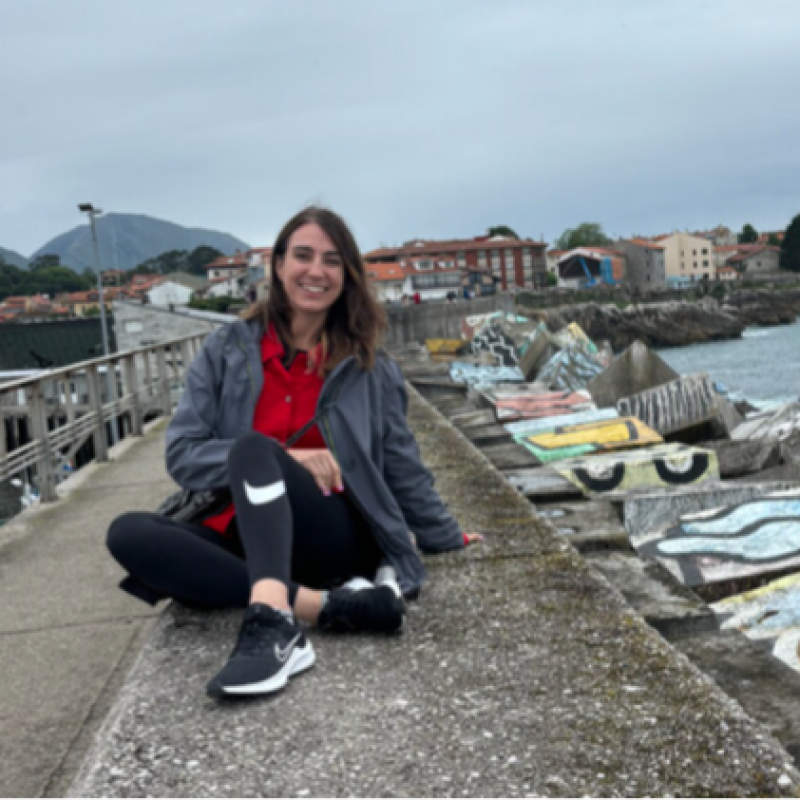
Miriam Garcia Oliva
Current Employer/Organisation Name
CEDEX-Spanish Ministry of Transport
Can you give us an overview of what you have done since you completed your research degree?
I worked as a Postdoc researcher at a Spanish University, in a field related to my PhD. Afterwards, I worked as a researcher at the Spanish Ministry of Transport on the subject of climate change adaptation in coastal areas. Finally, I became a civil servant at the same department, in the research centre (centre for harbours and coastal studies) where I’m currently coordinator of technical-scientific programmes
How did you become interested in the area you work in?
I found out that working as a researcher was very motivating for me during my PhD at Exeter University. I also found that maritime and coastal subjects are very interesting and a field with a rich future development.
How did you find opportunities in the area you work in and how did the recruitment process work?
I found opportunities mainly through networking and contacts (friends from Academia). In my last job before becoming a civil servant I had to pass a very strict selection process, considering many aspects from my CV (expertise, publications, training, etc) and justifying all of them.
What does your current role involve?
It involves giving support to the coastal department of the Ministry to solve problems and challenges like coastal erosion and flooding a in urban coastal areas with the most updated knowledge and considering various pressures and constraints from the environment, which makes the problems site-specific.
What skills are involved in your work and how did your research degree help develop them?
Analytical skills, ability to manage teams and communicate with different actors, having extensive knowledge of cutting edge methodologies. My PhD helped me to develop all of them.
What do you enjoy most about your role?
I enjoy the fact that the research I do is intended to be directly applied to solve real life problems and improve the coastal environment plus it’s a really beautiful learning process.
What are the challenges in your role?
Some of the challenges are the lack of resources (staff, budget for equipment) and the difficulty in setting good collaboration between different public administrations and stakeholders involved in the coastal management.
What has surprised you about your role?
It surprises me that very often when I talk about it with people that are not familiar to it they usually react in a good manner in terms of interest.
Did you engage in any additional activities or roles (i.e. organising conferences, entering PGR showcase, being a PGR Rep etc.) during your research degree, and how did these help prepare you for a career beyond academia?
No, but I only helped my supervisor with organisation of a conference, like other PhD colleagues at that time, and we enjoyed it a lot so I would recommend to participate in that kind of activities
What skills and experiences have been most useful for your career?
Critical thinking, versatility, being able to find resources.
What advice would you give to a current student who wishes to pursue your career?
To be willing to keep updating your knowledge all the time, try to participate in projects and fields that really motivate you and surround yourself with people who are brilliant experts but also humble and able to share their knowledge with the you and the others.
What are your plans for the future?
I’d like to manage teams and be a research coordinator in national strategic plans or becoming advisor to their managers.