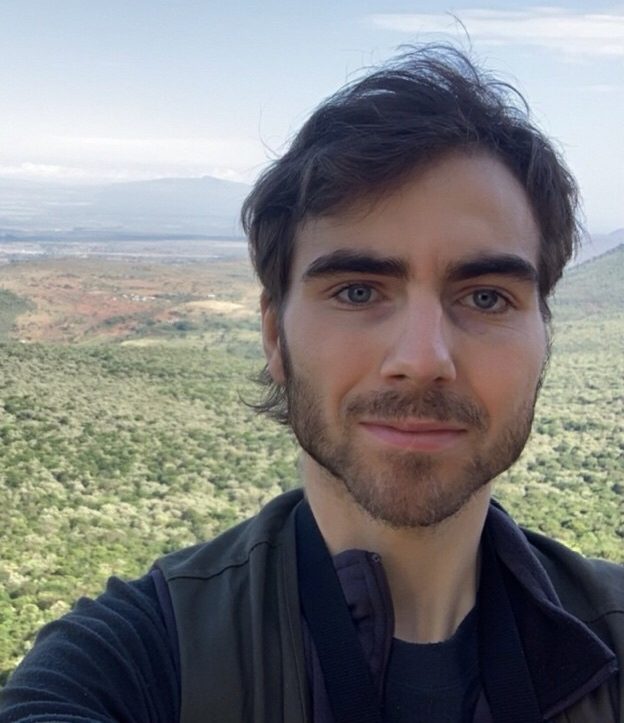
Oscar Falconer
Current Employer/Organisation Name
University College Dublin
What have you been doing since leaving Exeter, and what are you doing now?
During my MSc where I devised, organised, and carried out a laboratory based experiment investigating how earthworms shape and influence key soil microbial functional traits, the first of its kind at the institution. My ability to effectively devise, organise, and communicate my project allowed me to recruit multiple supervisors from various disciplines to support the research. The experience and confidence to pursue self-driven research that my MSc at the University of Exeter provided continued into and greatly benefited my current PhD at University College Dublin where I have created a self-generated project continuing this research in a field-based context and designing in situ sampling devices.
In the course of my current research I have independently set-up collaborations with various institutions and individuals (including IFCN Madeira, Airfield estate Dublin, and the Natural History Museum London) in order to enhance my research’s impact and relevance through outreach events and mutual research collaboration.
I have also continued to further my experience and love of science communication such as incorporating artistic imagery and storytelling to allow both ‘professors and punters’ to engage with my research. I am also privileged to apply this approach to the wider research environment by writing a regular ‘Did you see?’ feature for Mensa’s award-winning magazine IQ, distilling new research into accessible summaries.
Why did you choose this career? And what do you enjoy most about your work?
I fervently believe in a holistic approach to academia and do not limit my inquiry and interest to one academic field. Instead, I delight in combining various diverse fields of academia and utilising aspects of various academic disciplines in my research. I delight in investigating science as a whole and believe it should not be researched solely within separate disciplinary boundaries. For example, the laws of physics determine the nature of chemistry which determines the structure of biology, which in turn utilizes and exploits chemistry and physics, and as such these scientific disciplines should be seen as continuations of one discipline. Consequently meant that continuing to study and engage with academia has allowed me to exploit and utilise the many opportunities available at University to continue my love of research in a diverse variety of disciplines.
What did you enjoy most about your programme and what was the biggest highlight?
The diverse range of topics and academics from a wide range of disciplines encompassed by the course provided incredibly fertile grounds for fostering a more holistic research environment as well as opening up the possibility of engaging in a variety of research disciplines from field based observational behavioural ecology to laboratory based microbiological and virological assays.
One of the biggest highlight was the opportunity to propose a novel self-generated research project and recruit supervisors from a variety of disciplines to explore a research avenue in an area that was completely new to the university.
What did you most enjoy about studying here?
The beautiful modern campus, a diverse course encompassing a range of disciplines, great research facilities facilitating a wide range of research.
Why did you choose to study at Exeter?
The MSc Evolutionary and Behavioural Ecology at the University of Exeter seemed to attempt to utilise a more holistic approach to research. Additionally the course leader at the open day exhibited great enthusiasm for the courses holistic approach.
What skills and experiences have been most useful for your career?
The opportunity to devise, organise, and complete my own self-generated research project and recruit supervisors from various disciplines to support the project. This experience engendered huge confidence to not be afraid to pursue your own research and create new projects and collaborations encompassing a diverse range of disciplines.
What advice would you give to a current student who wishes to pursue your career?
“Be more Darwin”
Don’t forsake proposing/pursuing your own research ideas. Self-driven inquiry for knowledges sake alone is a keystone of science and risks being lost in an increasingly commercially-driven research environment.
“Paint and Picture”
Do not be afraid to utilise unconventional methods to help communicate your research to a wider audience (both academic and public). Its amazing how well incorporating artistic imagery and story telling can help both professors and punters to engage with a piece of research.
What are your plans for the future?
My plans are to continue to engage in research in a variety of scientific disciplines beyond my PhD, in addition to becoming more involved in science communication through academic lecturing, multi media projects, and public presentations and events.