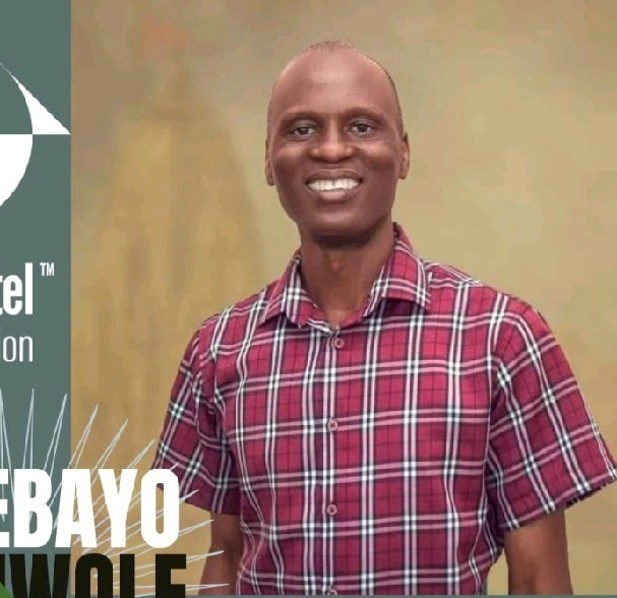
Adebayo Oluwole Eludoyin
Current Employer/Organisation Name
Obafemi Awolowo University
Can you give us an overview of what you have done since you completed your research degree?
I have taught both undergraduate and postgraduate students, led and supervised research, examined M.Sc. and Ph.D. students in Nigeria and South Africa, won the African Science Leadership Programme award as part of Cohort 5, in 2019, TWAS-DFG in 2020/21, became a full-time Professor of Geography (Hydrology and GIS applications) in 2023, pioneered the Headship of Department of Environmental Management at Lagos State University (Epe Campus) at acting level, was awarded a fellowship as part of Cohort 2 of Regenerative Initiative Course (RegenIntel), and am currently a Representative (Faculty of Social Sciences) and Board Member of the Postgraduate College Board of Obafemi Awolowo University, Ile-Ife, in Nigeria.
How did you become interested in the area you work in?
I was introduced to Water Pollution during my M.Sc. Environmental Management and Control in Nigeria and continued in that line for my later abandoned Ph.D. (due to problematic supervision) in Nigeria. My idea became sharpened at Exeter with my supervisory team. My supervisor introduced me to the North Wyke Farm Platform of Rothamsted Research, whose facilities and support helped me achieved my Ph.D. The 500 GBP annual support from the Department to participate in the 3rd Annual Catchment Summer School at Aberdeen, and further training in MATLAB Modelling at Moat House, Reading as well as those of the Research Enhancement and Development Programmes of the University of Exeter made me refine my focus, and discussion in these fora solidified my interest.
How did you find opportunities in the area you work in and how did the recruitment process work?
I was working in my University (Obafemi Awolowo University) in Nigeria before I secured the opportunity for the Ph.D. at Exeter. In fact, my sponsor was the Government of Nigeria via the Obafemi Awolowo University Staff Training Programme, now known as TETFUND.
What does your current role involve?
As a Professor, I teach, mentor, lead and build capacities in my area of specialisations, and in the general area of research. I also assess, review and recommend leaders for academic, research and community roles.
What skills are involved in your work and how did your research degree help develop them?
Teaching, public talk/lecture, conceptualisation, statistical and GIS analysis/modelling, research and administration. All these were handled under a different Research Enhancement and Development Programme course, and Teaching and Learning in Higher Education (TLHE) courses that I took, and Summer/Winter Scientific Programmes/Workshops that I participated in during my Ph.D. at Exeter.
What do you enjoy most about your role?
Passing down knowledge and building capacity have been a role that I love to play.
What are the challenges in your role?
Time management, and dealing with poor facilities.
What has surprised you about your role?
Nothing. I love it.
Did you engage in any additional activities or roles (i.e. organising conferences, entering PGR showcase, being a PGR Rep etc.) during your research degree, and how did these help prepare you for a career beyond academia?
I participated in YES-Environment. We (three colleagues from Geography at Exeter and I) were runner-up in the Heat at Oxford. I also volunteered to be interviewed by international Ph.D. students working on Students’ Experiences at Exeter.
What skills and experiences have been most useful for your career?
Very supportive supervision, the concept of having a student mentor for a new Ph.D. student, and College and University support through the Enhancement and Research Development Programmes, and the graduation talk by the Chancellor.
What advice would you give to a current student who wishes to pursue your career?
Geography is driven by passion. My love for physical geography is driven by my passion for Environmental Sustainability and Regeneration. The passionate drive is also rewarding, because the market is wide. My focus on GIS application is complementarily rewarding. I advise those who want to build a career in physical geography to be passionate, and expressive; particular in research writing. Capacity building as an academic is also rewarding, as this is what we can do for the society – build creative, confident and passionate individuals in physical geography, to pass the baton on as a resourceful person to meet global needs.
What are your plans for the future?
Help to institutionalise strong Geospatial Information Science in my university, build more capacity through M.Sc. and Ph.D. supervision, present my Inaugural Lecture in 2027, and take a major lead in Environmental Research, both nationally and internationally.