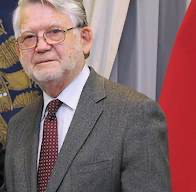
Daniel Williams
Current Employer/Organisation Name
University of Exeter
Can you give us an overview of what you have done since you completed your research degree?
Previously I was a Mathematics PhD student researching the climates of Earth-like planets. Since then, I started work last year as a Postdoctoral Researcher in aviation impacts at the University of Exeter.
How did you become interested in the area you work in?
The research area sits within the intersection of climate research and industry, so I feel that the work that I am doing has clear, tangible links with what might happen in the ‘real world’ rather than something that is only ever confined to theoretical models. My interest in climate science has been longstanding and resulted in my path from an undergraduate degree in physics and astronomy, to a postgraduate degree in meteorology and subsequently my PhD and PostDoc.
How did you find opportunities in the area you work in and how did the recruitment process work?
Along with other Postdoctoral researcher opportunities, I searched for roles using the Met Jobs mailing list, which is a collated list of job opportunities run from the University of Reading for weather and climate roles within and outside the UK. I also found my current position on Exeter’s job opportunity listing. The application consisted of an online form and CV, which was followed by an interview before being offered the role.
What does your current role involve?
Contrails, the white ice clouds that form in the wake of passing aeroplanes, can contribute to global warming under certain conditions when they persist for a long time. My research is trying to understand and predict these conditions that lead to persistent contrail formation. I use a combination of meteorological model data and satellite imagery along with statistical techniques to develop a prediction of whether a contrail might be formed or not. If we can do this effectively we might be able to significantly reduce the impact of the aviation industry on our climate.
What skills are involved in your work and how did your research degree help develop them?
Most of my work involves significant use of coding, both for data processing and for creating predictions and figures of my results. My PhD involved running climate models and heavily used coding in different languages. Experience from this made it easier to pick up and work with new sources of data, such as satellite imagery, and also provided me with the skillset to usefully manipulate climate data.
What do you enjoy most about your role?
It’s fun being involved with a research area that is quickly developing, has industry involvement; with the satisfaction that the research that I’m doing might have a tangible impact to reduce the impact of human-induced global warming in future. I also really like how I can look out of a window most days and immediately ‘see’ my research, since contrails are often visible.
What are the challenges in your role?
Working in a field that is developing so incredibly fast. I’m having to keep up with developments in literature far more than my previous research areas.
What has surprised you about your role?
Honestly, how big an impact contrails have on the climate! They have a bigger impact than the CO2 emitted by a plane from burning fuel.
Did you engage in any additional activities or roles (i.e. organising conferences, entering PGR showcase, being a PGR Rep etc.) during your research degree, and how did these help prepare you for a career beyond academia?
I was involved in organising conferences and workshops, convening conference sessions and outreach activities during my PhD. I found these useful not only in terms of being able to work with people external to the university of even my own department, but also being able to explain science to audiences who might not have specialist background knowledge.
What skills and experiences have been most useful for your career?
Problem solving; a general but keen interest in many areas of science (not just your specialism).
What advice would you give to a current student who wishes to pursue your career?
Take any opportunity that you’re offered. If you see, hear or read about something that you find interesting and want to pursue it, talk to someone even if it doesn’t look like there’s an opportunity; one may get made for you by doing so!
What are your plans for the future?
I’m keen to stay in climate and weather research. Where exactly and in what form I don’t know yet, but I really like Exeter and Devon and would love to stay in the area.