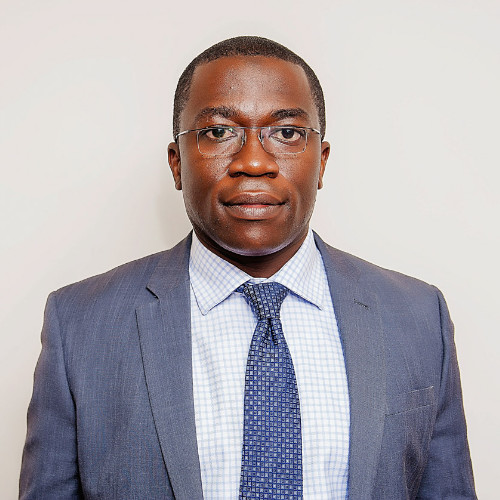
Dr Eric Twum
Current Employer/Organisation Name
Terraformation
Can you give us an overview of what you have done since you completed your research degree?
After completing my PhD in Politics at University of Exeter in 2012, I built a career at the intersection of environmental sustainability, climate policy, green growth, and international development. My work has focused on translating research into practical solutions that support sustainable development, climate resilience, and inclusive economic growth across Africa and beyond.
Immediately following my doctorate, I founded and led the Institute of Green Growth Solutions, where I worked with governments, development partners, and international organisations to design and implement climate change, environmental management, and green economy initiatives. During this period, I led research and policy development on green jobs, climate transition, natural resource governance, and labour market transformation.
From 2017 to 2023, I served as Chief Executive Officer and Senior Lecturer at the Institute of Environmental Assessment. In this role, I provided strategic leadership while delivering professional training and advisory services in environmental management, ESG integration, sustainability reporting, climate change, and environmental assessment. I also supported public and private sector organisations in strengthening governance systems and sustainability practices.
My work has included consultancy and advisory assignments for organisations such as United Nations Development Programme, World Bank, International Labour Organization, World Food Programme, Global Affairs Canada, GIZ, and several government ministries. These assignments have ranged from climate finance reviews and drought management planning to climate risk assessments, green jobs strategies, and environmental and social safeguards audits.
Between 2023 and 2025, I served as Africa Director for the Vulnerable Twenty Group, where I supported climate-vulnerable countries across Africa in developing Climate Prosperity Plans, advancing green jobs and decent work, strengthening climate resilience, and mobilising partnerships and financing for climate action. I also advised governments on integrating climate policy with employment and economic development strategies.
More recently, I joined Terraformation as Country Representative, where I lead the design and implementation of green growth, reforestation, agroforestry, and climate resilience programmes. My responsibilities include managing environmental projects, strengthening governance systems, overseeing finance and procurement functions, and coordinating cross-functional teams to deliver measurable environmental and social impact.
Alongside my professional work, I have maintained a strong commitment to research, policy analysis, and professional development. I am a Chartered Environmentalist and Fellow of the Institute of Sustainability and Environmental Professionals, UK and I continue to contribute to environmental sustainability through research, publication reviews, and policy advisory work.
How did you become interested in the area you work in?
My interest in environmental sustainability and climate policy began during my undergraduate studies in Natural Resource Management at Kwame Nkrumah University of Science and Technology. Growing up in Ghana, I witnessed first-hand how environmental degradation, and climate-related challenges affected communities, livelihoods, and economic development.
This interest deepened during my Master’s degree in Environmental Resource Management at Brandenburg University of Technology, where I gained a broader understanding of global environmental challenges and the policies needed to address them. I became particularly interested in how governments, businesses, and communities can work together to balance economic growth with environmental protection.
My PhD in Politics at University of Exeter enabled me to explore the governance and policy dimensions of environmental management. During my Doctoral research, I became increasingly interested in how policy decisions influence environmental outcomes and how evidence-based research can shape more effective and equitable solutions.
Since then, I have been fortunate to build a career that combines research, policy development, and practical implementation. Working with governments, international organisations, development partners, and local communities has reinforced my belief that environmental sustainability is not only about protecting ecosystems but also about creating economic opportunities, improving livelihoods, and building resilience to climate change.
What continues to motivate me is the opportunity to contribute to real-world solutions. Whether supporting climate-vulnerable countries, developing green jobs strategies, advancing sustainable land restoration, or helping institutions strengthen their environmental governance, I find great satisfaction in seeing research and policy translated into tangible impacts that benefit people and the planet.
How did you find opportunities in the area you work in and how did the recruitment process work?
My career has developed through a combination of academic research, professional networking and consultancy work. After completing my PhD at the University of Exeter, I was keen to apply my research expertise to real-world environmental and development challenges. Rather than following a single career path, I pursued opportunities that allowed me to combine research, policy engagement, and project implementation.
Many of the opportunities I secured came through building a strong professional reputation and maintaining relationships with colleagues, government institutions, development partners, and international organisations. As I became involved in environmental policy research, climate change projects, and sustainability initiatives, I was increasingly approached for consultancy assignments and advisory roles. These experiences helped me expand my network and opened doors to leadership positions in organisations working on climate resilience, green growth, and sustainable development.
The recruitment processes varied depending on the role. For consultancy assignments with organisations such as the World Bank, UN agencies, GIZ, and other development partners, the process typically involved submitting a technical proposal, demonstrating relevant expertise, and participating in interviews or presentations. For senior leadership positions, such as CEO, Africa Director, and Country Representative roles, recruitment often focused on a combination of technical expertise, strategic leadership experience, stakeholder engagement skills, and a proven track record of delivering results.
One lesson I have learned is that opportunities often arise from consistently producing high-quality work and building credibility in your field. While qualifications and research credentials are important, employers and partners also look for practical experience, problem-solving ability, leadership skills, and the capacity to work effectively with diverse stakeholders.
For current students and recent graduates, I would recommend gaining practical experience wherever possible, building professional networks, attending industry events, and remaining open to interdisciplinary opportunities. Many of the most rewarding opportunities in my career came from combining academic knowledge with practical application and being willing to step outside traditional career boundaries.
What does your current role involve?
I currently serve as Country Representative for Terraformation, where I lead the development and implementation of programmes that promote climate resilience, environmental sustainability, and green economic growth.
A significant part of my role involves designing and managing projects focused on reforestation, agroforestry, land restoration, and climate adaptation. I work closely with government agencies, development partners, local communities, and private-sector stakeholders to identify opportunities for environmental restoration and sustainable land management while ensuring that projects contribute to local livelihoods and economic development.
I am also responsible for overseeing the full project cycle, from concept development and resource mobilisation to implementation, monitoring, and reporting. This includes ensuring compliance with donor requirements, environmental safeguards, and governance standards. In addition, I manage finance, procurement, and administrative functions to ensure projects are delivered efficiently and transparently.
Another important aspect of my work is stakeholder engagement and partnership building. Climate and sustainability challenges require collaboration across multiple sectors, so I spend considerable time working with policymakers, technical experts, community leaders, investors, and international organisations to develop practical solutions and mobilise support for environmental initiatives.
The role also involves leading multidisciplinary teams, providing strategic direction, and ensuring that programmes achieve measurable environmental and social outcomes. Ultimately, my work focuses on helping translate climate and sustainability goals into practical actions that restore ecosystems, strengthen resilience, create green jobs, and contribute to long-term sustainable development.
What I enjoy most about the role is the opportunity to combine research, policy, and implementation. It allows me to work on some of the most pressing environmental challenges while supporting communities and institutions in building a more sustainable future.
What skills are involved in your work and how did your research degree help develop them?
My work requires a combination of technical, analytical, leadership, and communication skills. Working in the fields of climate change, environmental sustainability, and international development means regularly engaging with complex policy issues, managing multidisciplinary projects, and collaborating with a wide range of stakeholders, including governments, development partners, private-sector organisations, and local communities.
One of the most important skills is research and analytical thinking. Much of my work involves assessing environmental challenges, evaluating policies, interpreting data, and developing evidence-based recommendations. My PhD at the University of Exeter was instrumental in developing these abilities. It taught me how to critically analyse complex issues, evaluate evidence, identify knowledge gaps, and develop robust arguments and solutions.
Another key skill is project and programme management. In my current and previous roles, I have been responsible for leading large-scale climate, sustainability, and development projects, often involving multiple partners and funding organisations. My doctoral studies helped me develop strong organisational skills, manage long-term projects independently, and deliver high-quality outputs within demanding deadlines.
Communication and stakeholder engagement are also essential. Whether presenting research findings, facilitating workshops, advising policymakers, or negotiating partnerships, I need to communicate complex technical information in a clear and accessible way. During my PhD, I regularly presented my research, wrote academic papers, and defended my ideas, which significantly strengthened my ability to communicate with both specialist and non-specialist audiences.
My work also requires leadership and strategic thinking. Working as a Country Representative, I have led teams, developed organisational strategies, and guided decision-making processes. The independence and problem-solving mindset developed through doctoral research gave me the confidence to take initiative, manage uncertainty, and make informed decisions in challenging situations.
Finally, adaptability and collaboration are critical skills in the environmental and development sectors. Climate and sustainability issues are inherently interdisciplinary, requiring collaboration across different sectors, cultures, and professional backgrounds. My research degree exposed me to diverse perspectives and taught me how to work effectively with people from different disciplines and countries.
Overall, my PhD was much more than an academic qualification. It helped me develop a broad set of transferable skills including critical thinking, project management, communication, leadership, and problem-solving that continue to underpin my professional success and enable me to make meaningful contributions to environmental sustainability and climate action.
What do you enjoy most about your role?
What I enjoy most about my role is the opportunity to make a tangible difference by helping address some of the most pressing environmental and climate challenges in the world. My work allows me to contribute to initiatives that restore degraded landscapes, strengthen climate resilience, promote sustainable livelihoods, and support communities that are often most vulnerable to the impacts of climate change.
I particularly enjoy the diversity of the role. No two days are the same. One day I may be working with government officials on environmental policy, and the next I may be engaging with local communities, development partners, researchers, or private-sector organisations to design and implement sustainability projects. This variety keeps the work both challenging and rewarding.
Another aspect I find fulfilling is the opportunity to bridge the gap between research, policy, and practice. Throughout my career, I have been passionate about ensuring that research and evidence inform real-world decision-making. It is incredibly rewarding to see ideas and recommendations translated into programmes and policies that create measurable environmental, social, and economic benefits.
I also enjoy working with people from different disciplines, cultures, and backgrounds. Environmental and sustainability challenges require collaboration, and I value the opportunity to learn from others while building partnerships that can drive meaningful change. Leading multidisciplinary teams and supporting the professional growth of colleagues is another aspect of the role that I find particularly satisfying.
Perhaps most importantly, I am motivated by the long-term impact of the work. Whether it is supporting climate-vulnerable countries, creating opportunities for green jobs, improving environmental governance, or restoring ecosystems, I take great satisfaction in knowing that the work contributes to a more sustainable and resilient future for both people and the planet.
Looking back, one of the most rewarding aspects of my career has been seeing how research, policy, and practical action can come together to create positive change. Being able to play a part in that process is what continues to inspire and motivate me every day.
What are the challenges in your role?
One of the biggest challenges in my role is addressing complex environmental and climate issues that often involve competing priorities. Governments, businesses, communities, and development partners may have different objectives, so finding solutions that balance environmental sustainability, economic development, and social needs requires careful analysis, negotiation, and collaboration.
Resource mobilisation and securing sustainable funding can also be challenging. Many climate and environmental initiatives require significant long-term investment, and part of my role involves working with donors, governments, and partners to identify funding opportunities and ensure that projects remain financially sustainable.
Despite these challenges, I see them as opportunities for growth and innovation. The complexity of the work is one of the reasons I find it rewarding. Overcoming these challenges requires critical thinking, collaboration, resilience, and leadership skills that I have continued to develop throughout my career.
What has surprised you about your role?
One of the biggest surprises about my role has been how much of my time is spent working with people and building relationships, rather than focusing solely on technical environmental issues. When I was completing my PhD at the University of Exeter, I expected that a career in environmental policy and sustainability would be driven primarily by research and technical analysis. While these skills remain important, I have learned that successful environmental and climate initiatives depend just as much on stakeholder engagement, communication, negotiation, and partnership building.
I have also been surprised by how interconnected environmental challenges are with other development issues such as economic growth, employment, health, education, food security, and social inclusion. Climate change and environmental sustainability are not standalone issues; they influence and are influenced by almost every aspect of society. This has made my work far more multidisciplinary and dynamic than I initially anticipated.
Did you engage in any additional activities or roles (i.e. organising conferences, entering PGR showcase, being a PGR Rep etc.) during your research degree, and how did these help prepare you for a career beyond academia?
Yes, alongside my PhD studies at the University of Exeter, I actively participated in a range of academic and professional activities that complemented my research and helped prepare me for my career beyond academia.
As a Doctoral researcher, I regularly attended and presented at seminars, conferences, and research workshops, which provided valuable opportunities to share my work, receive feedback, and engage with academics and practitioners from diverse disciplines. These experiences strengthened my presentation, public speaking, and networking skills, while also helping me communicate complex ideas to different audiences.
I also collaborated with fellow researchers and engaged in interdisciplinary discussions on environmental governance, sustainability, and public policy. Working with people from different academic backgrounds broadened my perspective and enhanced my ability to approach problems from multiple angles—an important skill that I continue to use when working with multidisciplinary teams and stakeholders.
In addition, I took part in professional development activities offered by the university, including training in research methods, project management, leadership, and communication. These opportunities helped me develop skills that extended beyond academic research and prepared me for leadership and advisory roles in the professional world.
Looking back, the experience of pursuing a doctorate was about much more than producing research. It provided opportunities to build professional networks, develop leadership and communication skills, and gain the confidence to engage with policymakers, practitioners, and international organisations. These experiences played a significant role in preparing me for a career that bridges research, policy, and practical implementation in the fields of sustainability and climate action. I must commend my Academic Supervisors, Prof. Claire Dunlop and Prof. Andrew Massey, for their guidance and support throughout my stay in Exeter.
What skills and experiences have been most useful for your career?
Several skills and experiences have been particularly valuable throughout my career, but the most important have been critical thinking, research and analysis, communication, leadership, stakeholder engagement, and project management.
My PhD at the University of Exeter played a significant role in developing my ability to analyse complex problems, evaluate evidence, and develop practical solutions. These skills have been essential in my work on climate policy, environmental governance, sustainability, and international development, where decisions often need to be based on rigorous analysis and evidence.
Strong communication skills have also been crucial. Throughout my career, I have had to engage with a wide range of audiences, including policymakers, government officials, donors, researchers, community leaders, and private-sector stakeholders. The ability to explain complex technical concepts clearly and persuasively has been invaluable in influencing policy, securing partnerships, and delivering successful projects.
Another key skill has been stakeholder management and relationship building. Many of the projects I have led involve collaboration between governments, international organisations, development partners, civil society, and local communities. Building trust, managing diverse interests, and fostering productive partnerships have been essential to achieving positive outcomes.
Perhaps the most useful lesson I have learned is the importance of combining academic knowledge with practical application. While technical expertise is important, the ability to translate research into actionable policies, programmes, and solutions is what creates real impact. The combination of research, leadership, and hands-on implementation experience has been the foundation of my career and continues to shape the way I approach my work today.
What advice would you give to a current student who wishes to pursue your career?
My advice would be to develop a strong foundation in your chosen field, and actively seek opportunities to apply your knowledge beyond the classroom. A career in sustainability, climate change, environmental policy, or international development requires both technical expertise and the ability to work effectively with people from different backgrounds and disciplines.
First, focus on developing strong research, analytical, and problem-solving skills. The ability to understand complex issues, assess evidence, and develop practical solutions is highly valued across academia, government, the private sector, and international organisations. Your degree provides an excellent foundation, but it is important to continuously expand your knowledge and stay informed about emerging trends and global challenges.
Second, gain as much practical experience as possible. Internships, volunteering, consultancy projects, fieldwork, and participation in research initiatives can provide valuable exposure to real-world challenges and help you understand how theory is applied in practice. These experiences often make you more competitive when seeking employment and help clarify your career interests.
Third, invest time in building your professional network. Attend conferences, workshops, seminars, and industry events, and engage with professionals working in areas that interest you. Many career opportunities arise through relationships, collaborations, and professional visibility. Do not underestimate the value of networking and maintaining connections with colleagues, mentors, and alumni.
Most importantly, pursue work that aligns with your values and interests. Sustainability and climate action can be demanding fields, but they are also incredibly rewarding. If you are passionate about making a positive impact, stay committed, keep learning, and be patient with your career journey. The skills and experiences you gain along the way will open doors to opportunities you may not yet imagine.
What are your plans for the future?
Looking ahead, I hope to continue contributing to climate resilience, environmental sustainability, and green economic transformation at both the national and international levels. My goal is to build on my experience in research, policy development, programme management, and leadership to support initiatives that create lasting environmental, social, and economic impact.
In the short to medium term, I aim to expand my work in climate adaptation, nature-based solutions, reforestation, and sustainable land management, particularly in Africa where the need for effective climate action is both urgent and significant. I am especially interested in supporting governments, development partners, and communities to develop innovative solutions that strengthen resilience while creating green jobs and sustainable livelihoods.
I also intend to continue contributing to policy research and thought leadership on climate change, environmental governance, green growth, and sustainable development. Throughout my career, I have been passionate about bridging the gap between research and practice, and I hope to remain actively engaged in generating evidence that informs policy and investment decisions.
Another important aspiration is to mentor and support the next generation of environmental and sustainability professionals. I have benefited greatly from the guidance of mentors throughout my own career, and I would like to continue sharing my experience through teaching, professional development programmes, coaching, and capacity-building initiatives.
Ultimately, my ambition is to continue making meaningful contributions towards a more sustainable, resilient, and inclusive future, while helping ensure that environmental sustainability and economic development go hand in hand. The challenges facing the world are significant, but they also present opportunities for innovation, collaboration, and positive change, and I am excited to remain part of that journey.