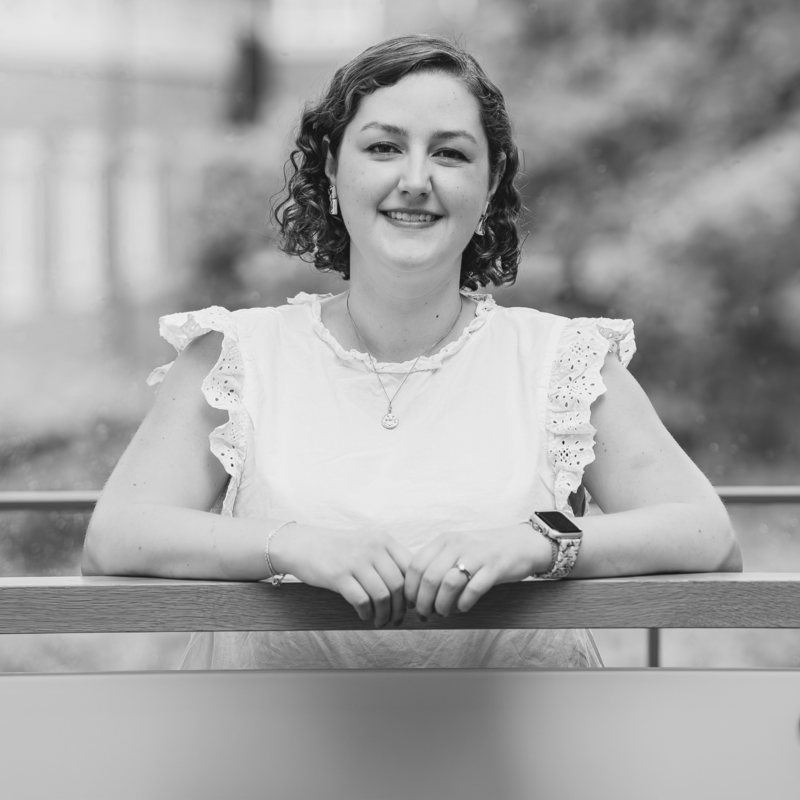
Jessica Farrow
Current Employer/Organisation Name
BHF Data Science Centre at Health Data Research UK
Can you give us an overview of what you have done since you completed your research degree?
I worked in the research communications team at Diabetes UK for 2 1/2 years, and now have worked as the BHF Data Science Centre team’s communications manager at HDR UK since October 2024.
How did you become interested in the area you work in?
I did lots of outreach work and teaching during my PhD and found it really rewarding, so I wanted a career in science communication or a similar area. I also have type 1 diabetes which led me to Diabetes UK’s resources and subsequently my role with them, and have stayed in comms (science-focused) since.
How did you find opportunities in the area you work in and how did the recruitment process work?
I found my research comms officer role on Diabetes UK’s social media where I’d been following for support and resources – I applied through their recruitment platform with a CV and some sifting questions. There was an initial online interview where I had to present on scicomms skills and answer questions from the interview panel, then a second in-person interview comprising of a timed written task (read a scientific paper and write a news story intended for the Diabetes UK website) and further conversations with senior members of the team.
I found my current comms manager role on LinkedIn – I was familiar with HDR UK as Diabetes UK run a few schemes in partnership with the organisation. I applied through their recruitment platform with a CV, cover letter, and anonymised sifting questions. I had a pre-interview task (happened to be the same as for Diabetes UK – write a news story based on a paper) which I completed in my own time and submitted before the interview. Then I had an online interview with the hiring panel. I was initially unsuccessful so applied for maternity cover for a similar role there – I was then contacted a few weeks later after their first choice candidate pulled out, and I was 2nd on their list (and had shown continued interest with the mat cover application).
What does your current role involve?
I look after all comms channels, content, and audiences for the BHF Data Science Centre at HDR UK. This includes:
– website (whole site, structure, individual pages, news stories)
– social media (primarily LinkedIn, so posts, articles, community interactions, partner promo and amplification)
– press (press releases, spokesperson training and prep, media briefings, journalist enquiries and interviews)
– internal comms (within and between the teams I sit in, wider organisation)
– events (webinars, conferences, workshops etc)
– stakeholder comms and influencing (relationships with partner organisations, research community, patient and public involvement and engagement)
– general comms facilitation (when I don’t have the exact expertise, I link up colleagues with people who can help)
What skills are involved in your work and how did your research degree help develop them?
Communication (in all forms)!! The outreach activities helped me to develop ways to explain complicated concepts in accessible ways depending on the channel and audience. E.g. My thesis contributed to my scientific writing skills. I learned how to interact with both senior researchers at conferences, my PhD and research group colleagues on a day-to-day basis, and UG students in my teaching role.
Problem solving is also very important – a PhD is essentially one massive problem to solve so you learn to think outside the box and try new things, and I can apply this approach to problems at work.
Multi-tasking, time management, and prioritisation – my role is very busy and varied, just like in your last months of a PhD …
What do you enjoy most about your role?
The variety! I’m a comms generalist so get to do all sorts of activities, and it’s never boring. The science coming out of the Centre is really interesting and important, and with a pivot to service delivery from research impact I’ll have to get stuck in with learning some new marketing skills.
What are the challenges in your role?
The variety! Because I’m a comms generalist I sometimes have to ask for support when I don’t have the exact expertise – I tend to pick up lots of tasks that don’t have an obvious owner, and I also sit across two teams across the organisation (so have twice as many meetings), so time management is very important.
What has surprised you about your role?
The variety!
Did you engage in any additional activities or roles (i.e. organising conferences, entering PGR showcase, being a PGR Rep etc.) during your research degree, and how did these help prepare you for a career beyond academia?
Outreach (Soapbox Science, Pint of Science etc), demonstrating/teaching for UG students, Student Advisory Group rep – see previous answers for more detail.
What skills and experiences have been most useful for your career?
See previous answer on comms, problem solving, multi-tasking etc.
What advice would you give to a current student who wishes to pursue your career?
The best way to learn comms is by doing comms, and don’t be afraid to ask for help.
What are your plans for the future?
More press and marketing training, and progress into more senior/influential communications roles (ideally with a focus on science).