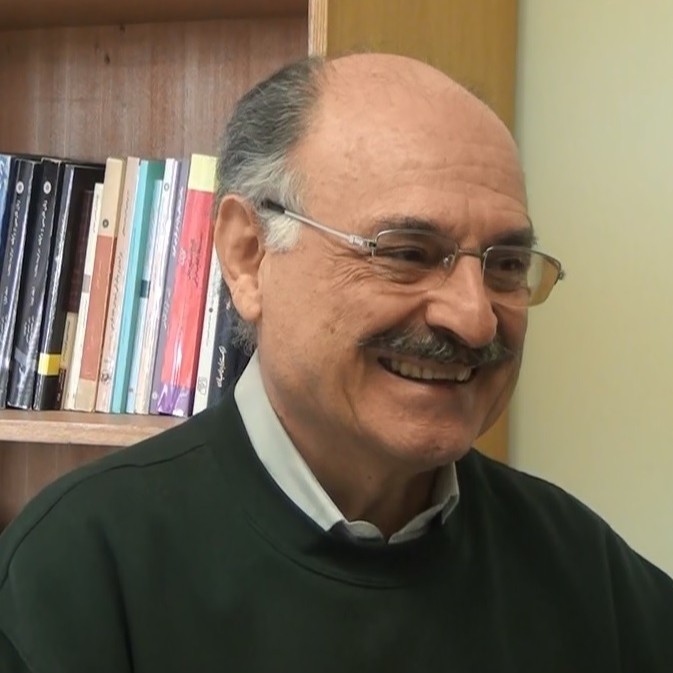
Seyed Mostafa Assi
Current Employer/Organisation Name
Institute for Humanities and Cultural Studies
Can you give us an overview of what you have done since you completed your research degree?
I have been a full-time member of the academic staff of the Institute for Humanities and Cultural Studies (IHCS), teaching and researching on linguistics, lexicography, terminology and corpus linguistics.
How did you become interested in the area you work in?
After getting my B.A. in English literature and M.A. in linguistics from the University of Tehran, I started my career as a member of the academic staff of the Iranian Academy of Language in 1971, where I was involved in research on different aspects of the Persian Language specially lexicology, terminology and lexicography. Later I was also interested in computational linguistics which led me to apply for PhD degree in this field.
How did you find opportunities in the area you work in and how did the recruitment process work?
I had the chance of being introduced and recommended to the Iranian Academy of Language by my university professors.
What does your current role involve?
Though retired at the present time, I am still active and doing research in the mentioned fields.
What skills are involved in your work and how did your research degree help develop them?
Doing research on different aspects of the Persian Language specially lexicology, terminology and lexicography resulted in the compilation of several dictionaries such as A Comprehensive Persian-English Dictionary, A Bilingual Dictionary of Linguistic Terms and An Advanced Learners’ Dictionary of Persian. I have also founded a the first Persian Linguistic Database (PLDB) and a research centre for corpus linguistics recognized as the Centre of Excellence for Corpus Linguistics in Iran.
What do you enjoy most about your role?
I believe I have had some achievements in my field and for the enhancement of the position of the Persian Language.
What are the challenges in your role?
There are still a lot of works to be done for the promotion of language studies and solving linguistic problems in our country.
What has surprised you about your role?
I have always noticed the rapid progress of modern linguistics, its applications and ever expanding its many interdisciplinary branches which are all helpful in different areas of knowledge and technology.
Did you engage in any additional activities or roles (i.e. organising conferences, entering PGR showcase, being a PGR Rep etc.) during your research degree, and how did these help prepare you for a career beyond academia?
I had the chance to participate in several conferences and summer schools during my studies at Exeter University and later as a member of the European Association for Lexicography (EURALEX) in other conferences and gatherings.
What skills and experiences have been most useful for your career?
Computer techniques, terminology, working with corpora and nowadays, AI.
What advice would you give to a current student who wishes to pursue your career?
Try to be up to date.
What are your plans for the future?
Continue my research and finish my current projects.