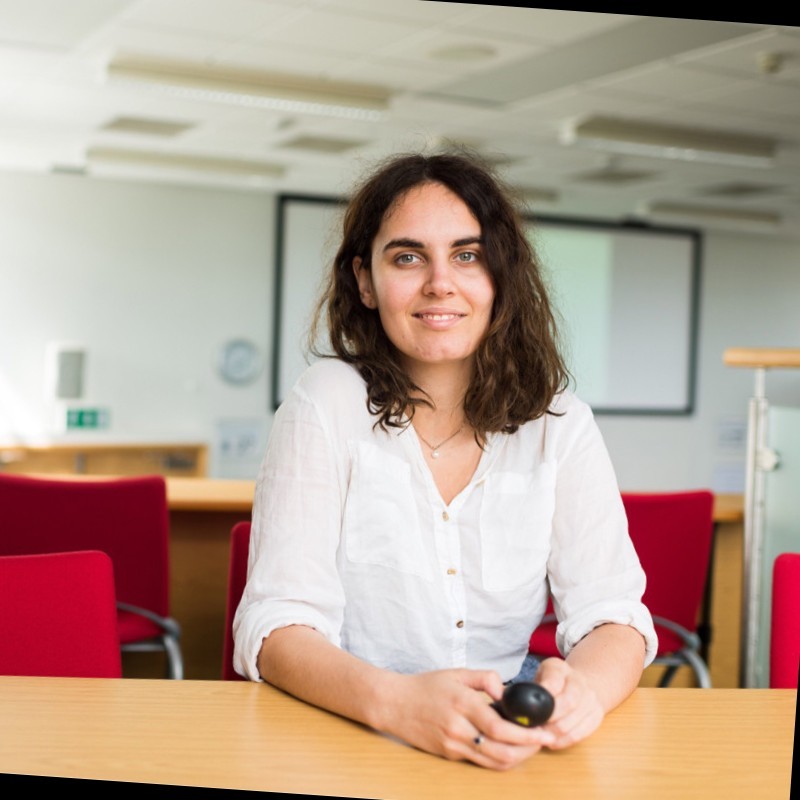
Marija Soldatovic
Current Employer/Organisation Name
What have you been doing since leaving Exeter, and what are you doing now?
I secured an offer from Google for a full time Software Engineer (SWE) position while at University and have been there since. These days I work in Google Ads in London, for the Monetization team, maintaining the infrastructure which makes sure “Publishers” (websites, youtubers, online news agencies, essentially anywhere on the internet that serves ads) are paid the right amounts for serving them and catch fraudsters. Before that, I was working in Google Cloud, on the Frontend team for Cloud Security. I also run the London Women in Ads group which pulls together Women SWEs/UXers and PMs working in Ads.
Why did you choose this career? And what do you enjoy most about your work?
I’ve always been a bit of a world-builder and debater, which comes in handy when designing large scale architecture required to keep Google going. I most enjoy the time before a project properly begins, when you get to work with many cross-functional teams (Legal, UX, PMs) and come up with a solution that solves a problem, often complex and requiring lots of debate and back and forth. i feel like that’s where Software Engineers really get to stretch their thinking muscles, and the coding part comes naturally easily afterwards.
Please tell us if you were a member of any societies, groups or sports clubs?
Whilst at Exeter I was the VP, then President of the Computing Society. I also had a brief stint in the Basketball team, and did Polo (the horse-riding kind) in my third year. There were small societies in the middle, Video Game Soc and a Toasmasters style society whose name I no longer recall.
What did you enjoy most about your programme and what was the biggest highlight?
Definitely the biggest highlight was the second year group project with Matt Collison, building a scavenger hunt game meant to introduce new students to the campus. But I think that was due to the fantastic oversight of Prof.Collison and many other such fantastic lecturers (David Wakeling, Hugo Barbosa, Jacqueline Christmas all come to mind as memorable).
What did you most enjoy about studying here?
The campus and the camaraderie between the students. The fantastic sport facilities and ability to try out many different things. How close everything was together.
Why did you choose to study at Exeter?
I don’t have a particularly profound answer for this. I think I liked the course and the feedback of other students online about what it was like to study and live there.
What skills and experiences have been most useful for your career?
Breaking a vague problem into precise pieces and being comfortable not knowing things and learning about them. My day involves Java, Kotlin, Dart, config languages, and systems older than some of the students still in university. Nobody taught me most of them — my degree taught me how to learn a new thing quickly and not panic or become paralyzed with that initial step into the unfamiliar. If I had to boil it down: your degree gives you a way of thinking and proof that you can finish hard things. The specific skills you’ll pick up on the job — and keep picking up for your whole career.”
What advice would you give to a current student who wishes to pursue your career?
Don’t over‑index on the language or framework. Students ask me ‘should I learn Python or Java or Rust?’ It doesn’t really matter. You can learn all of them, or just two. They all do similar jobs. What transfers is understanding fundamentals: how data is stored, how systems talk to each other, how to reason about what happens when something fails.
Apply for opportunities even if you don’t feel ready. Internships, placements, graduate schemes — you will never feel ready, and the application process itself is practice. Interviews are a skill separate from engineering: do mock interviews, practice working through problems out loud, and don’t treat rejection like a failure.
What are your plans for the future?
I’ll be honest: I don’t have a detailed roadmap, and I’d be a bit suspicious of anyone in tech who claims to — things change too fast. I suppose one constant thing is that I want to be running my own team. I’ve mentored an apprentice and a few junior teammates, and watching someone go from ‘I have no idea where to start’ to shipping something on their own is genuinely more satisfying to me than any bug I’ve fixed. Between now and then I’m deliberately picking work that’s cross‑functional and that puts me in the position of coordinating people rather than just contributing — tech leading before managing, basically.