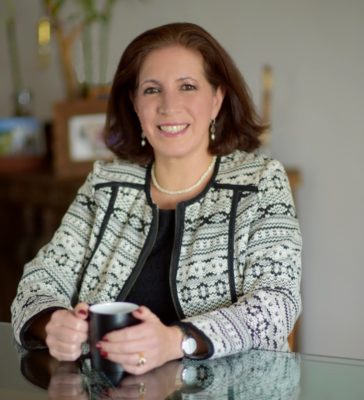
Tatevik Mnatsakanyan
Current Employer/Organisation Name
Institute for Diplomacy and International Affairs, Loughborough University London
Can you give us an overview of what you have done since you completed your research degree?
Soon after completion, I got an offer of a short-term contract for teaching at the Institute I am still with to date. While at the time, the contract was very short-term (6 months) and the future of the newly opened campus and of the job uncertain, it gave me the opportunity to gain experience and grow, eventually allowing me to transfer to a permanent position. In the past 10 years, I have been through steady career development progressing from lecturer to senior lecturer. In addition to teaching masters programmes, I have taken on academic leadership roles such as Programme Director, Director of Studies for the London Campus, and more. I also recently obtained my Senior Fellow of Higher Education Academy (SFHEA) qualification.
How did you become interested in the area you work in?
For a very long time, I had been aware that I wanted to go back to academia and engage in teaching and research. This urge became especially clear when I worked as a practitioner in the fields relevant to my area of study for a few years after obtaining my Master’s degree. While I could have remained and made career in the practitioner world (in particular working for the World Bank), it soon became clear to me that my passion was in academic work. The observation, learning, and critical reflection in that position also played a great role.
As for the particular subject area, the drivers of my interest are both personal (having grown up in a country experiencing political upheaval and conflict) and more broadly intellectual as I am interested in a wide variety of fields and subjects but deeply curious about structures of power and relations and possibilities for change in societies through a multi-disciplinary lens.
How did you find opportunities in the area you work in and how did the recruitment process work?
Some part time research work that I had done with the colleagues in that institution while still doing my PhD at Exeter helped maintain good relations. The opportunity arose somewhat at the right time. I am fully aware this won’t be everyone’s experience but would wish to convey that I find it important also to be open to opportunities that might arrive from directions and in shape we might not expect. I have had many difficult challenges along the way, as well.
What does your current role involve?
As described above.
What skills are involved in your work and how did your research degree help develop them?
My PhD degree was indispensable for my role, as without it, an academic position would have been impossible.
What do you enjoy most about your role?
The constantly evolving landscape of what I teach, as well as the engagement with new cohorts of brilliant students every year – the diversity, richness of experience and wisdom they bring with them. It is a huge privilege to be able to inspire and be inspired by them, and yo know that I have been part of their journeys and stories along the way of exploring their passion, voice and career direction.
What are the challenges in your role?
The complexities of the UK higher education in general, in terms of the wider industry pressures on institutional finance, growing workload and demand, student recruitment as well as constant struggles to adapt to change (not least the rise of AI), while maintaining our values and beliefs.
What has surprised you about your role?
How fast one can immerse in their field while engaging in teaching: we do not (and cannot) learn everything first; we learn and discover and deepen our thinking while and in the process of teaching. Another thing that has surprised me is how much experience builds confidence and resilience.
Did you engage in any additional activities or roles (i.e. organising conferences, entering PGR showcase, being a PGR Rep etc.) during your research degree, and how did these help prepare you for a career beyond academia?
Most importantly, I regularly taught seminars in my role as Graduate Teaching Assistant, during the entirety of my PhD. At times this was challenging, taking away time and energy from my research (and had I been able to afford it financially, I’d have preferred less of this). But the role was also hugely important in building my skills set in teaching, as well as my profile which proved instrumental in both obtaining my job and performing my role of teaching in my present role.
I did also help, in a team of PGRs, organise a research conference. We also initiated a blog series where I contributed with pieces as well as helped edit other submissions. These were important experiences, giving a taste of various challenges as well a sense of what works or not.
What skills and experiences have been most useful for your career?
Teaching (as above).
What advice would you give to a current student who wishes to pursue your career?
Be open to unusual opportunities, perhaps ones that challenge your preconceptions or comfort zone. Persevere in your passion but also look after yourself, prioritise your health and wellbeing as I learned the necessity of this the hard way.
What are your plans for the future?
Continue in academia but hopefully with more time for research and publications, as so far my contract has been very restrictive in that regard.